Raft Island Residence
-
Set on Raft Island in Carr Inlet, part of the greater Puget Sound, this home is shaped as much by its constraints as by its opportunities. The site presented formidable challenges: a 65-foot southwest bluff face threatened by tidal erosion, a required 100-foot setback, a wetland zone along the northeast property line, and a steep 25% grade that complicated access. Layered over these environmental conditions were Shoreline ECA regulations, a fixed client budget, and a program designed for aging in place.
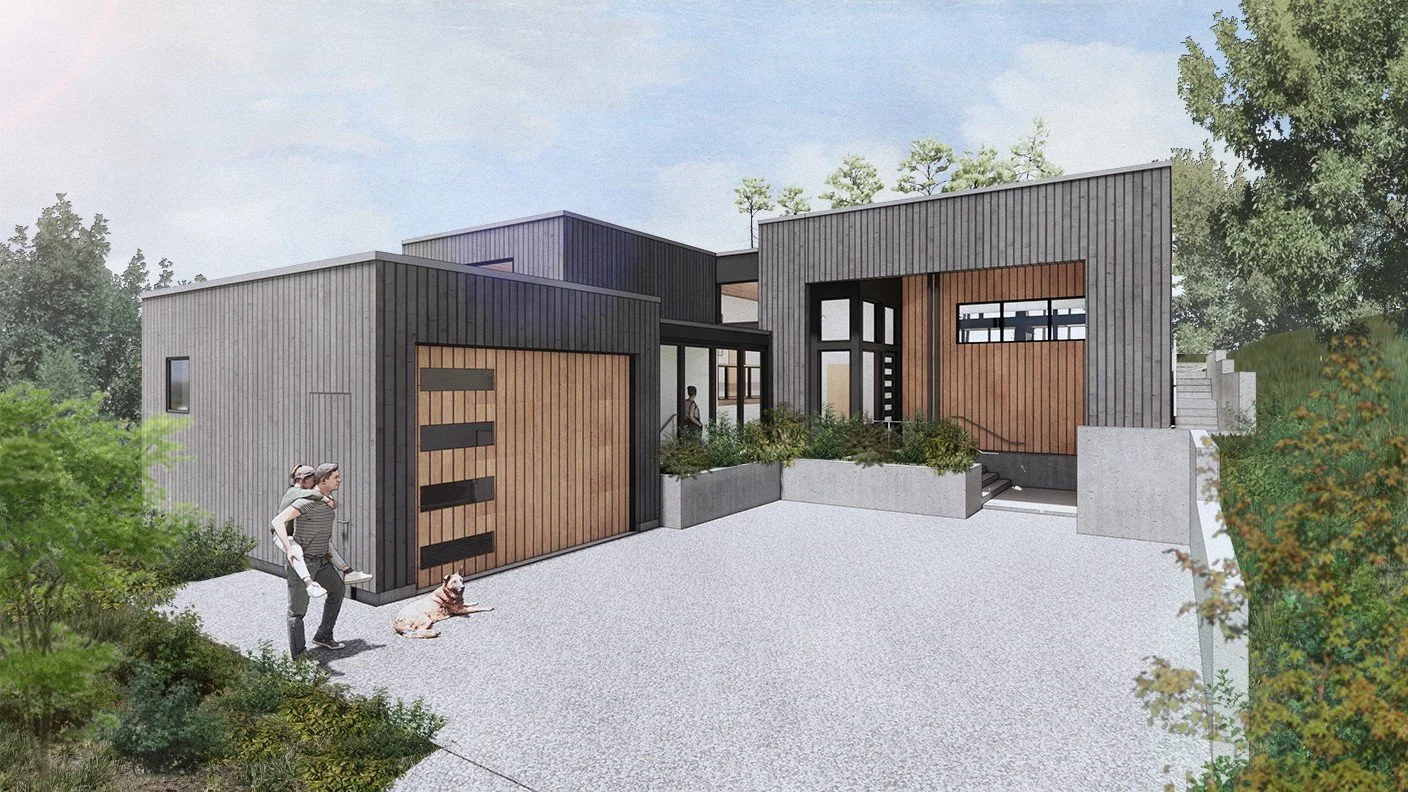
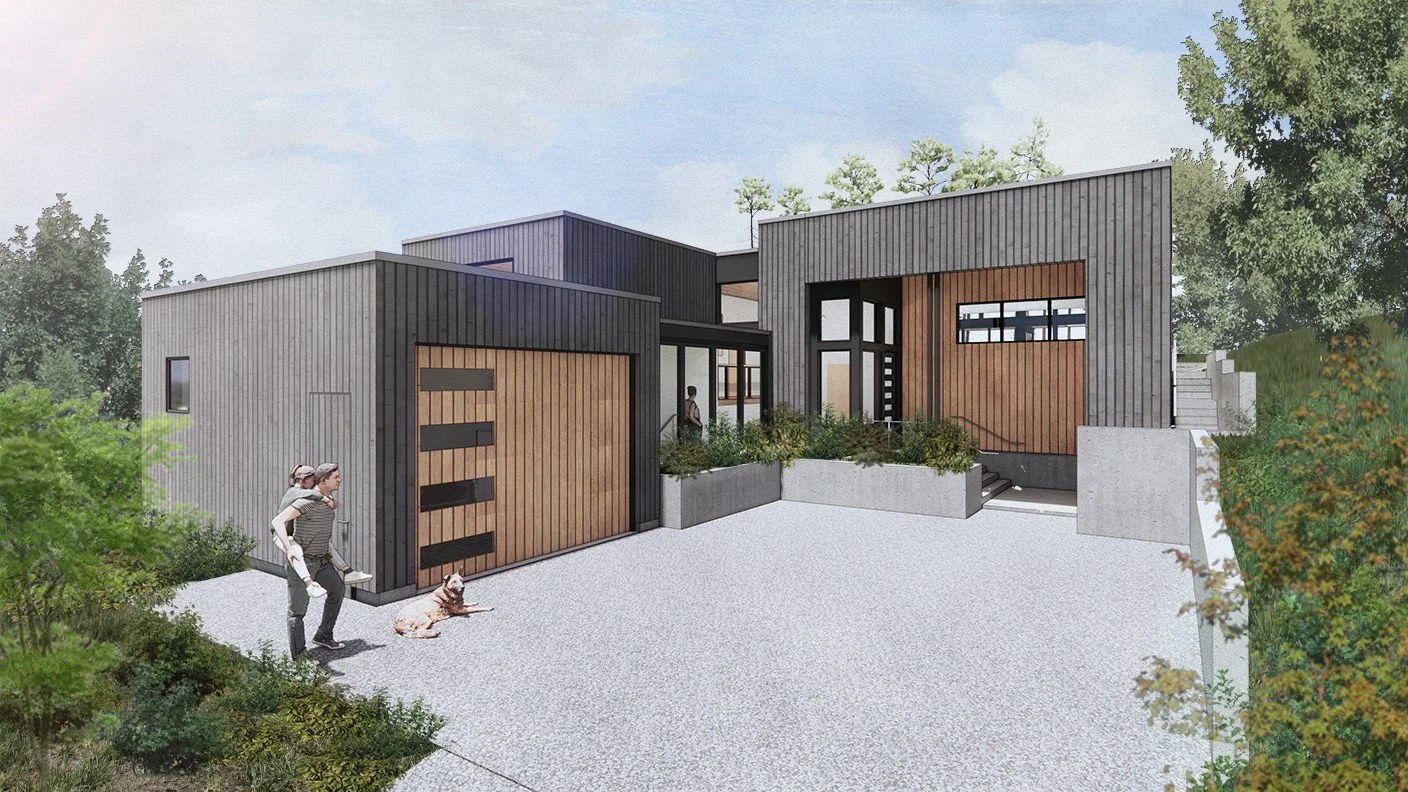
From the street, the house appears as a series of modest volumes stepping up the hillside, visually grounded to the slope. A planted roof above the two-car garage extends the landscape, offering seamless views from the guest bedroom and office while anchoring the building at the north end of the site. Blackened vertical wood siding helps the structure recede into the forest canopy, while warm wood accents at the entry add contrast and welcome. A planted bed softens the façade and creates a moment of pause, breaking up the sequence of stairs and easing the approach.
Inside, the layout is compact but intentional. Three bedrooms — a primary suite and two guests — are paired with two bathrooms, all anchored by an open living, dining, and kitchen space oriented toward sweeping views of Carr Inlet. A dedicated game table area extends from the dining room, reflecting the client’s love of hosting. Aging in place shaped many details: bathrooms include roll-in showers, circulation is kept primarily on one level, and the entry stair is designed to accommodate a future lift.
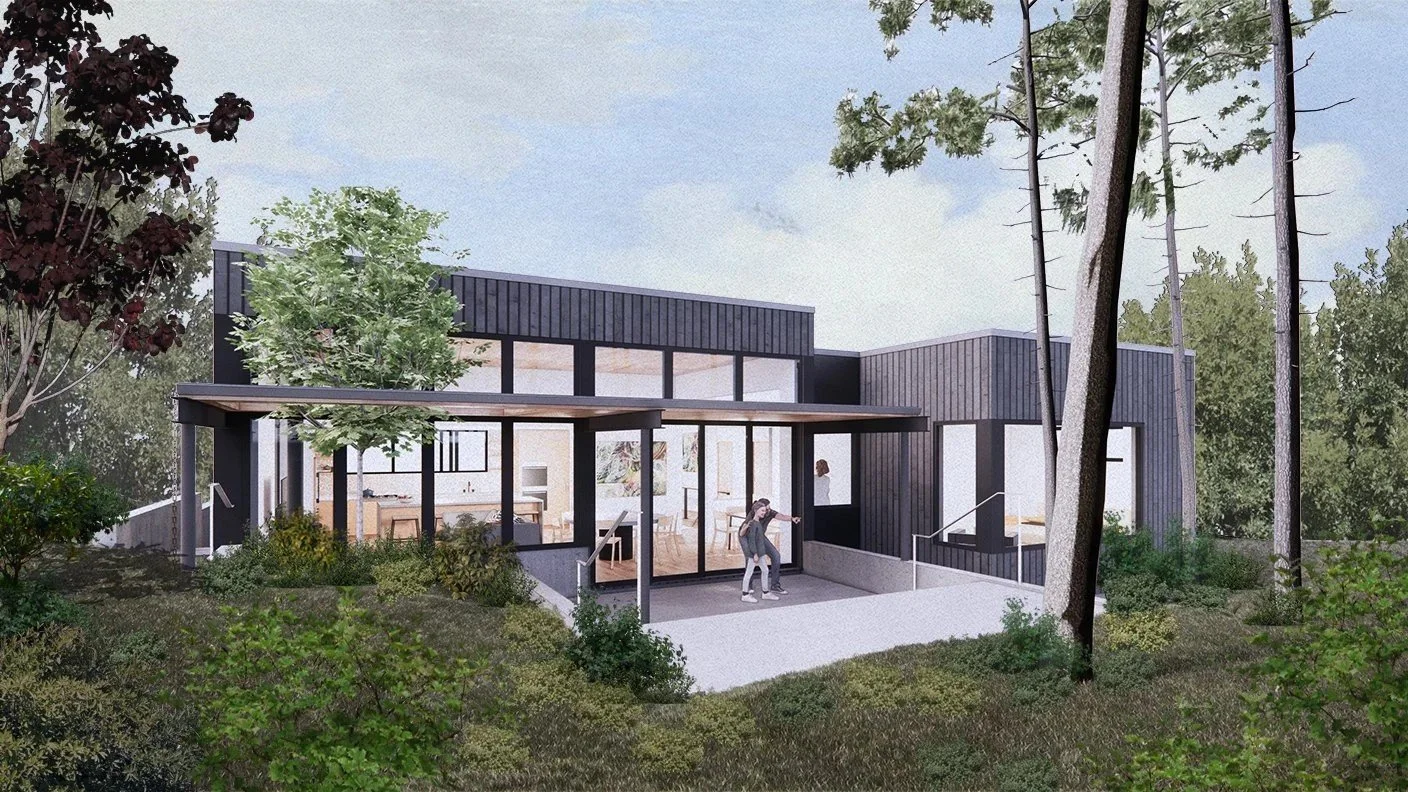
At the heart of the home, the living and dining spaces extend directly to an embedded patio. Set flush with the interior floor, the patio creates a seamless transition outdoors, increasing ease of access over time. The surrounding grade rises slightly above the patio edge, creating natural seating and a sense of refuge while maintaining openness to the view. A tree planted to grow through the patio roof will fill the space over time, reinforcing the connection between house and landscape.
Simple in form but layered in experience, the design makes light, shadow, and greenery central to daily life. By stepping the house with the land and using restrained materials, the home blends into its context while providing expansive connections to the surrounding environment.
This is a project defined by foresight; modest in size but deeply considered. Within tight constraints, it offers flexibility for the future and a grounded connection to place. It demonstrates how limitations can be transformed into a foundation for an enduring home, one that supports both solitude and community throughout the client’s life.
-
Architect & Interior Design: Johnston Architects
Structural Engineer: Quantum Consulting Engineers
Civil Engineer: SitePro Engineering
Environmental Consultant: Russel & Associates